
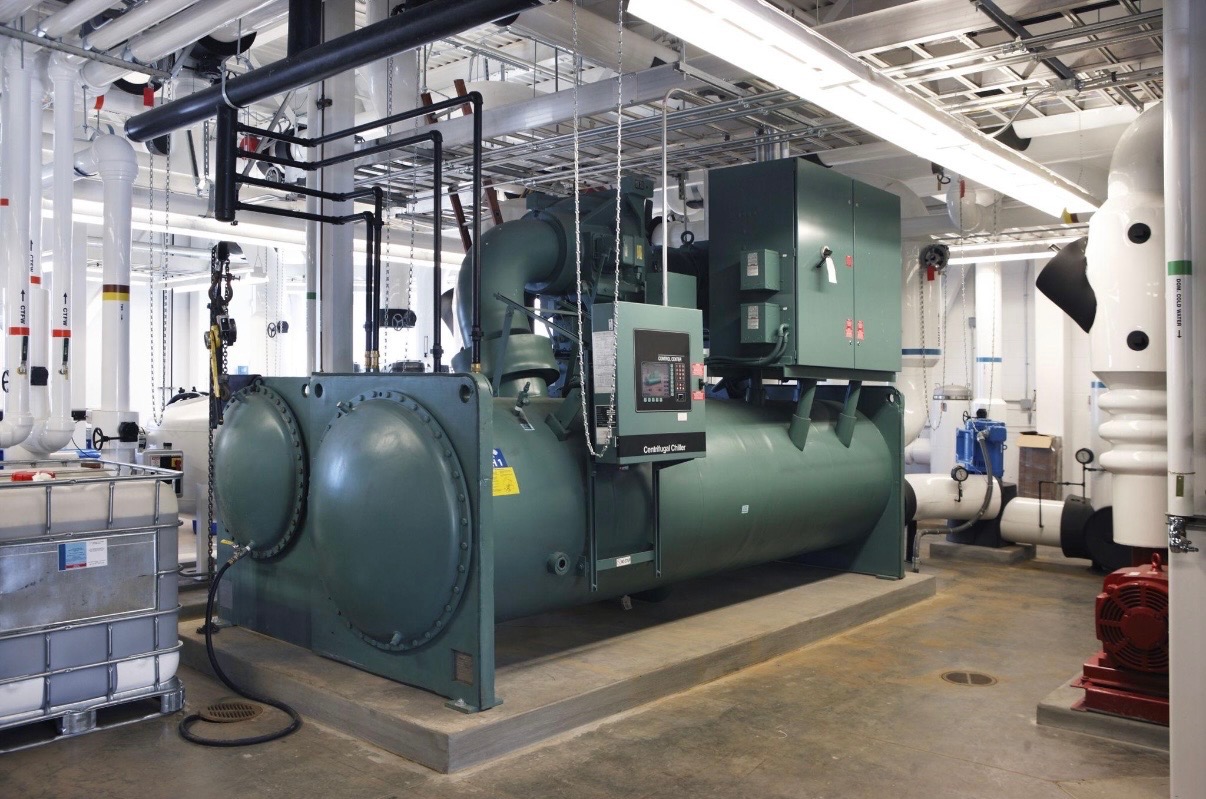
Looking for a buyer for 20–50 ton chillers in New York? NEW YORK Chiller Buyers purchases industrial and commercial chillers; we buy equipment rather than sell it. We make cash offers and provide upfront payment, and we handle refrigerant recovery, disconnect, crane and rigging, loading, freight, and hauling as part of the agreed scope. There is no requirement to test or run your chiller to request an offer.
Identify the 20–50 ton chillers being offered
A chiller in the 20–50 ton range can still be a substantial commercial or process asset, and its physical size is not determined by capacity alone. Air-cooled packages, water-cooled machines, and modular assemblies can have very different shapes and connection arrangements.
Share the capacity shown on the data plate, the complete model number, and approximate dimensions if available. Explain whether the chiller can be reached from a loading door or is on a roof or platform. Accessories such as pumps and controls should be listed separately.
Tell us what is known about the actual equipment, not just the total capacity of its building or plant. We consider all tonnages and refrigerants, including chillers from 20 to 2,000+ tons, and can discuss complete units or a clearly identified group of surplus machines.
Consider the selling situation
One situation to consider, if it applies to your property: Hospital and healthcare sites may need other cooling equipment and circulation routes to remain available while a surplus chiller is removed. Facilities and clinical access requirements can affect when an equipment room, loading dock, or exterior work area is available.
Ask the facilities contact to identify the offered asset and any patient, emergency, or delivery routes that must remain clear. Describe the location of the chiller and any shared utilities. A coordinated plan can separate the sale of one machine from ongoing operation of the rest of the campus.
Plan access for a New York chiller
A New York chiller might sit in a dense city building, an upstate industrial plant, a campus utility room, or an outdoor equipment yard. The actual position of the machine and its route to a truck matter more than the municipality alone.
For a basement or interior plant, identify doors, corridors, overhead clearance, and nearby equipment. For a roof or outdoor unit, describe access for lifting and loading, the available staging space, and any property rules that affect the work.
A closed or changing property: plan the path out
If ownership, access, or the site's operations are changing, identify who can grant entry and who can approve the sale. Note whether utilities, lighting, gates, and loading space will be available when the removal is coordinated. A clear contact and asset list are especially valuable when a facility team is changing.
NEW YORK Chiller Buyers handles the coordinated removal scope, including crane and rigging where needed, disconnection, loading, freight, and hauling. Explain any restrictions before the work is agreed so that the equipment owner and site team understand what is included and what other operations need to continue.
Describe size and access before requesting an offer
Approximate dimensions, a known weight, and photographs showing walls, doors, and overhead space are useful. If no drawing is available, say so. Measurements should not require climbing or moving equipment; a site representative can help identify what can be documented safely.
Condition, completeness, size, location, and the effort needed to remove the asset all help frame a useful offer discussion. Pictures and available records are welcome, but we do not require you to test or run the equipment. Do not put anyone at risk to reach a label or collect a measurement.
Refrigerant recovery and disconnection
Tell us the refrigerant shown on the chiller's label if it is legible; if it is unknown, say so. NEW YORK Chiller Buyers considers all refrigerants and handles refrigerant recovery as part of the removal scope. The owner should not vent refrigerant or open a circuit to prepare the machine for a sale. The specific equipment and site determine the work to discuss.
For a water-cooled system, also identify the water connections and any shared plant components that need to stay. For an air-cooled unit, the location of fans, power connections, and the loading route may be more useful. The applicable details depend on the machine, not on a generic checklist alone.
A cash offer and a clear scope
We buy chillers rather than listing or selling them. NEW YORK Chiller Buyers makes cash offers and provides upfront payment; discuss the payment terms, the equipment included, and the removal responsibilities before authorizing release. A clear agreement should distinguish the chiller from any pumps, controls, towers, or other property that the owner is keeping.
When comparing an offer, consider the complete transaction rather than only a headline number. Rigging, recovery, disconnect, loading, freight, and hauling can all affect the practical result. Explain what work is already complete and what remains so the proposed scope matches the actual site.
How to get started
Start with the asset list and a few photographs, then explain the site's current operating status. The discussion can cover a cash offer, upfront payment, the components included, and who will coordinate the equipment's release. Once the parties agree on scope, the removal plan can address recovery, disconnect, rigging, loading, and freight for the particular site.
If you are looking for a chiller buyer near you, begin with the equipment you have, its location in New York, and the best available contact for the site. From a single surplus unit to several machines from a plant shutdown, the goal is a straightforward purchase and a removal plan suited to the property.